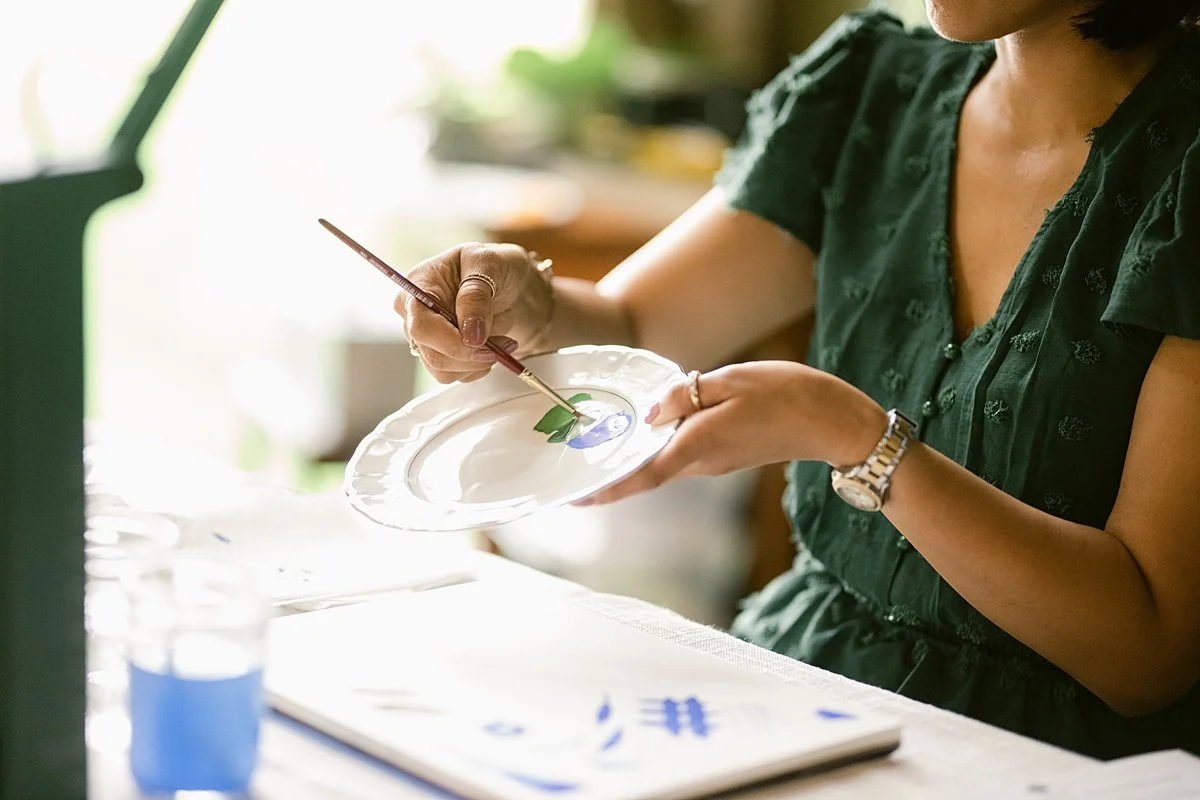
Basic Brushstrokes: Florals Tutorial
Disclosure: This post may contain affiliate links, meaning, at no additional cost to you, I will earn a commission if you choose to click through and make a purchase.
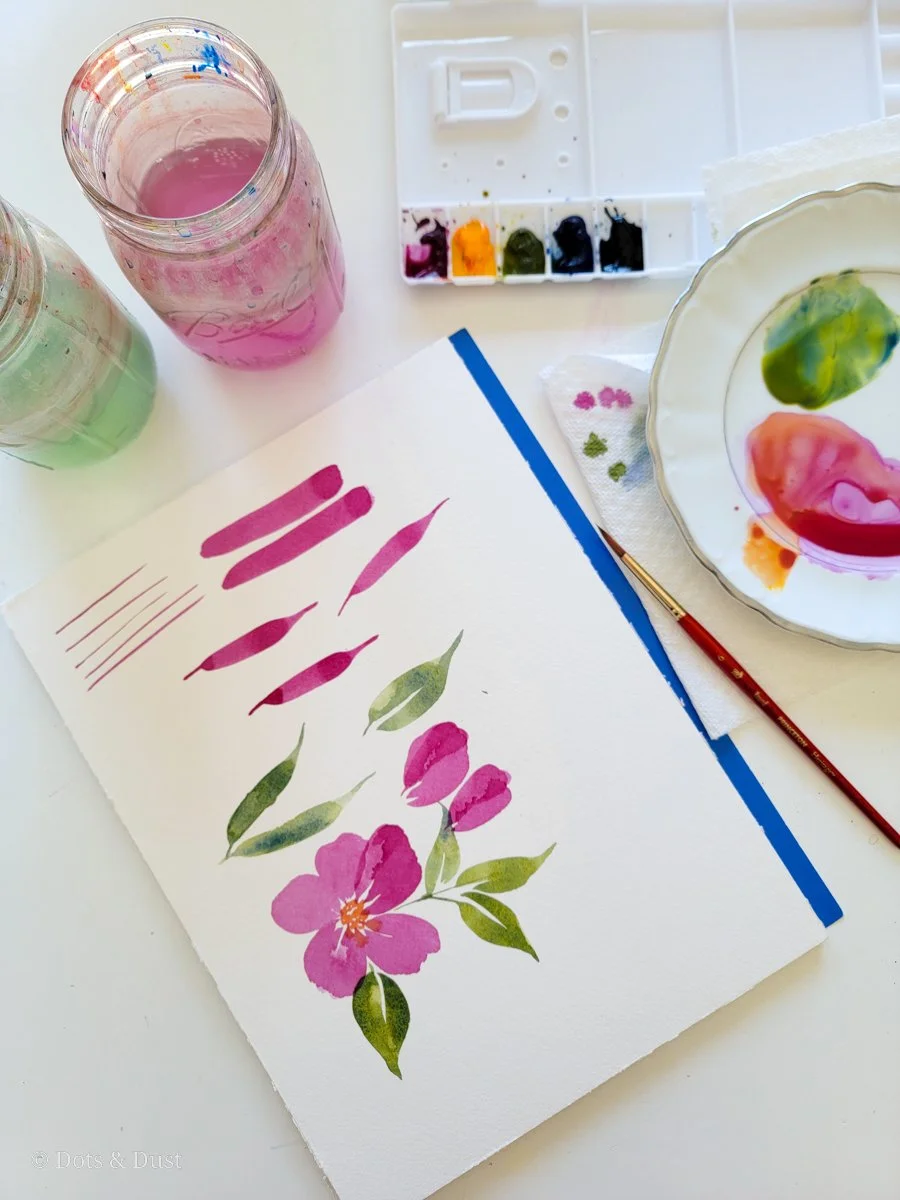
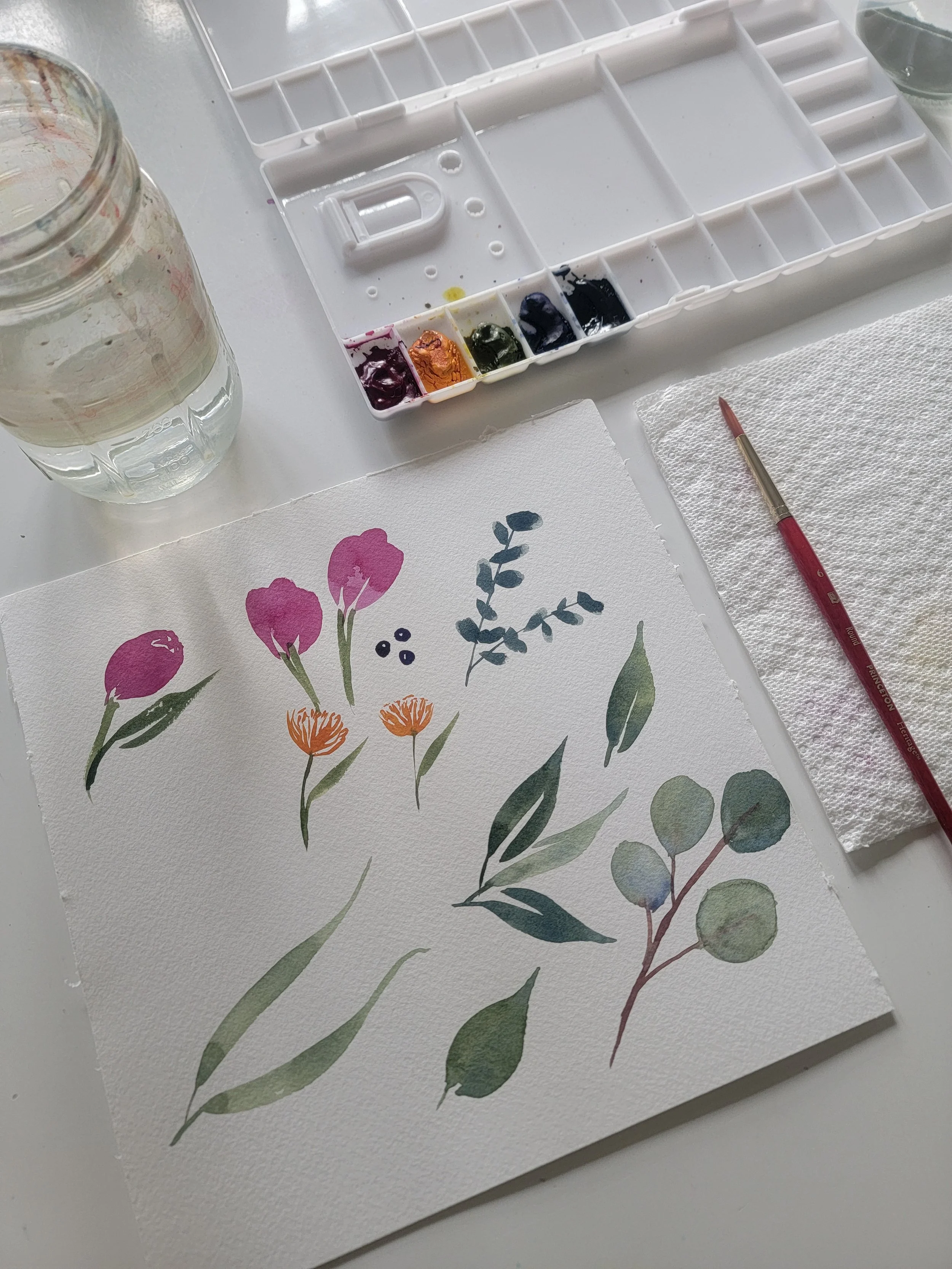
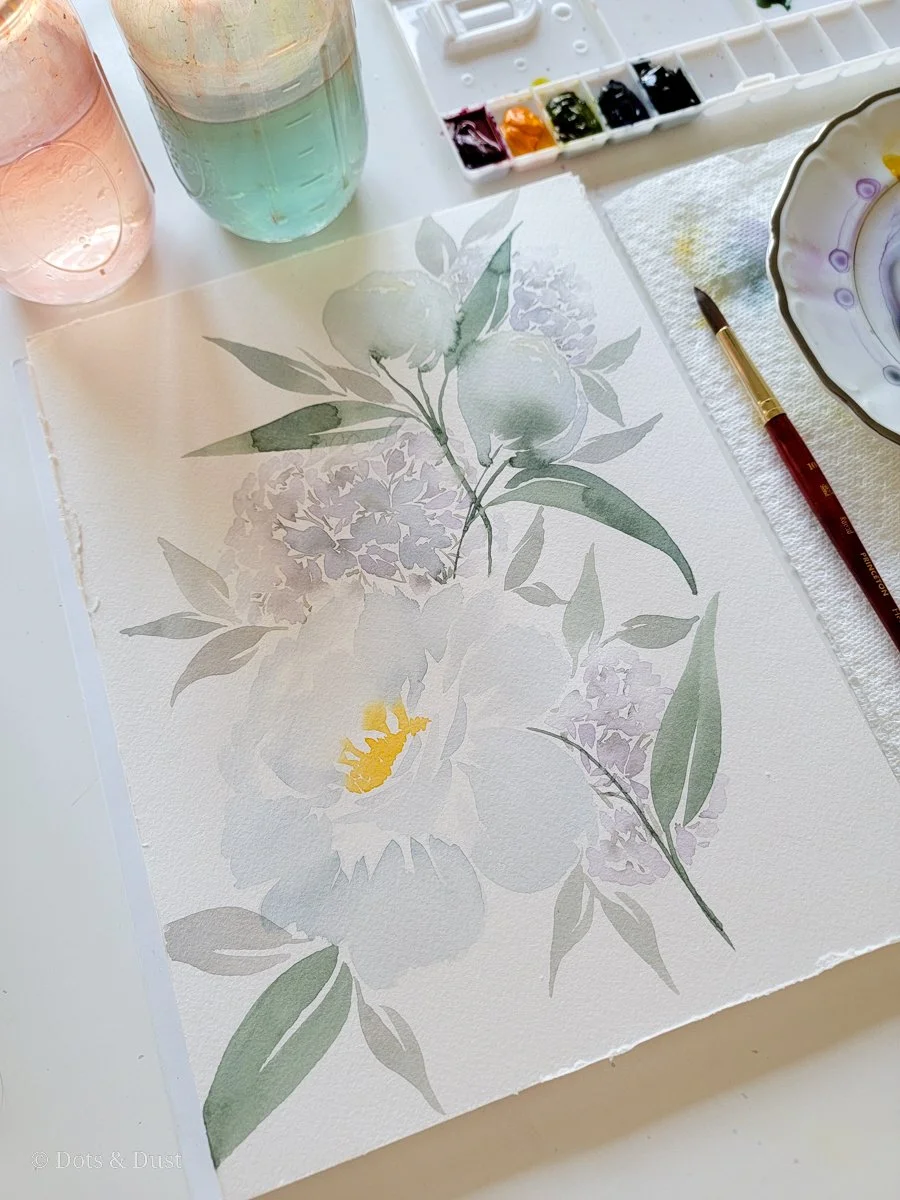
It’s no surprise to most that follow me on Instagram that my favorite subjects to paint are flowers. I know that it can seem intimidating for a beginner painting these, but they are actually very easy once you break them down to their basic brushstrokes. If you need a refresher on basic brushstrokes for watercolor, check out this blog post.
Supplies Needed:
watercolor paper
watercolor paints
round paintbrush in a size 6
Basic Brushstrokes to Practice:
thin lines
c-curve compound strokes
dots
Start with a little practice first to warm up. Paint very thin lines with the very tip of your brush. You are not applying any pressure and just dragging the tip of the brush across your surface. Also practice painting compound strokes. Both of these strokes can be found on this blog post.this blog post
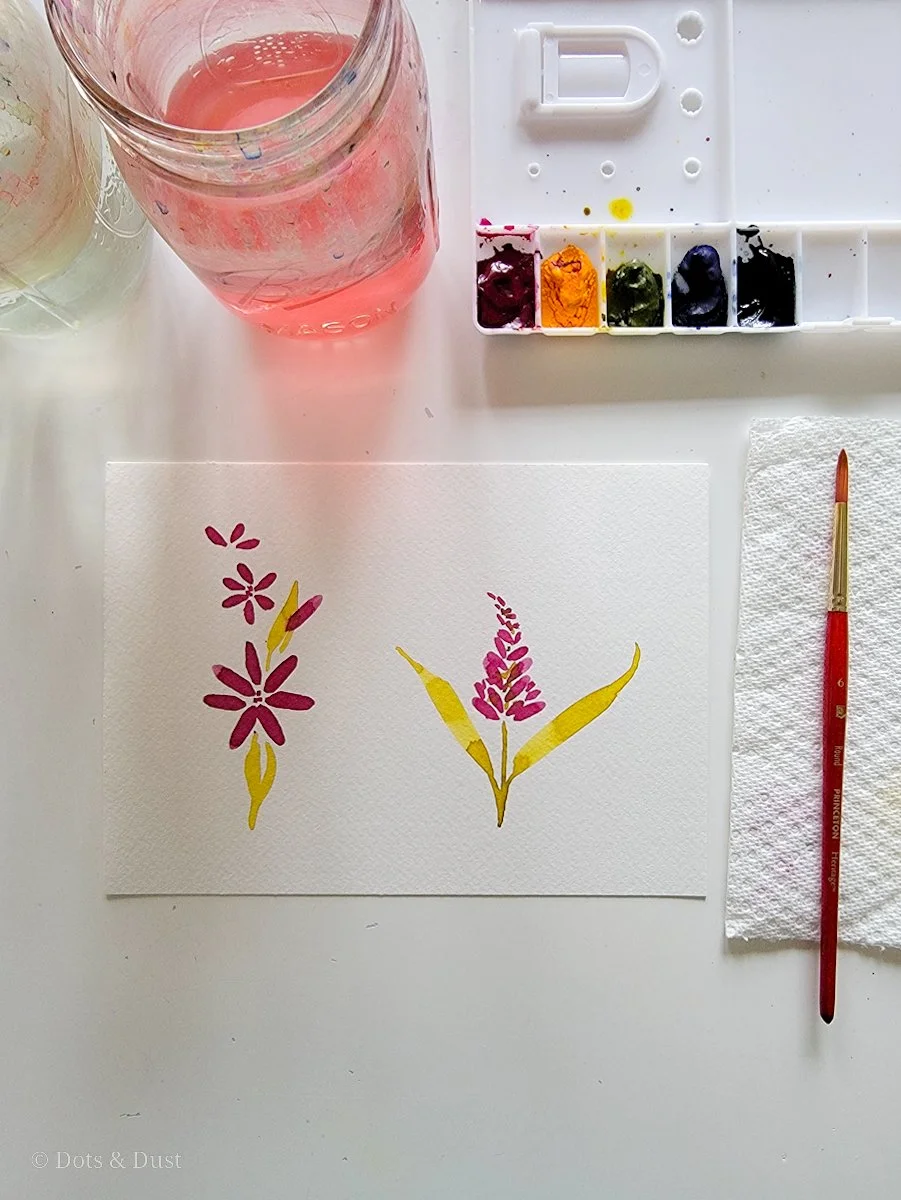
Once you get the hang of that, let’s start painting a flower petal. Keeping the brush bristles pointing towards the center of where your flower will be, paint a short thin line and then press down to full pressure on your bristles as you drag your brush away from the center. Then as you get to the size of petal you want, you will gradually pull up to light pressure and curve the bristles inward. This stroke is actually what I would call a “c-curve” strokes.
You can keep it as a one stroke petal or if you would like it to be a bigger petal, connect one or two more c-curve strokes to your first petal to make the petal bigger.
You are going to continue to add petals around the center of your flower until you are happy. I usually aim to have five or six petals per flower.
The key is to make sure that you are always aware of where the center of your flower is. You want your brushstrokes always to come from the center of the flower.
Also do not be afraid of white space in between strokes and in the center of your flower. That is important to help the viewer distinguish individual petals.
Lastly, paint dots in the center of your flower to show the stamen. Add some leaves to your flower and you are finished!
If you are more of a visual learner and want a more detailed look at how I paint basic flowers, see the video below:
Want to learn how to paint more flowers?
Take my digital course From Busy to Blooming: A Beginner’s Guide to Watercolor Florals



The Latest & The Greatest